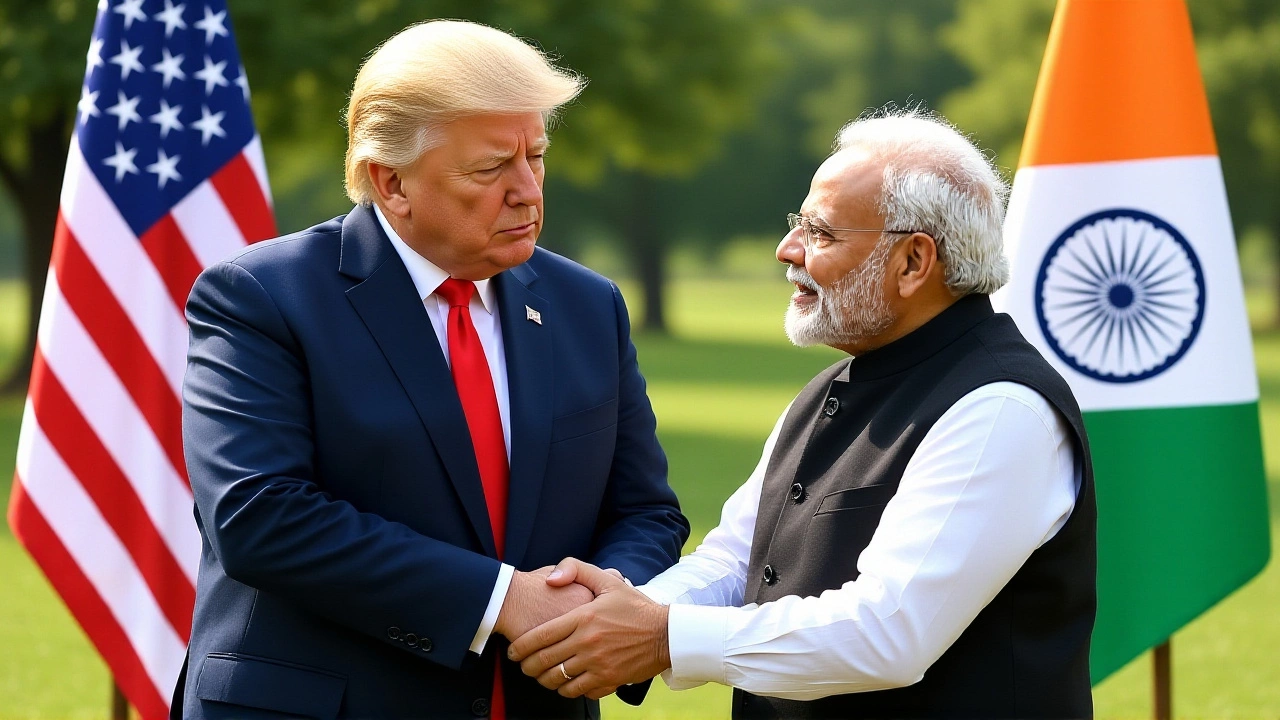
It’s a classic double-edged sword from Washington. On one hand, the Donald Trump, President of the United States administration has slapped a steep 29% tariff on Pakistani goods. On the other, it’s sending a senior envoy to Islamabad to discuss counter-terrorism and investment. The message is clear: cooperate on security, or face economic isolation.
The twist? While Pakistan faces this financial squeeze, India just secured a significant break. In a move that reshapes South Asian trade dynamics, the White House reduced tariffs on Indian exports to 18%, giving New Delhi a distinct competitive edge over its neighbors.
A Diplomatic Tightrope in Islamabad
Here’s the thing about American foreign policy under Trump: it’s transactional. That’s why Eric Meyer, Acting Senior Director for South and Central Asian Affairs, is flying to Islamabad for a three-day visit. His agenda isn’t just pleasantries; it’s high-stakes negotiation.
Meyer will meet with Pakistani leadership to bolster anti-terrorism cooperation—a perennial sticking point in US-Pakistan relations. But he’s also there to push for American investment in Pakistan’s mineral sector. Specifically, he’ll attend the Pakistan Mineral Investment ForumIslamabad, where discussions will focus on critical minerals like lithium, cobalt, and copper.
Turns out, while the US slams the door on cheap imports, it wants to pick the lock on strategic resources. This dual approach leaves Prime Minister Shehbaz Sharif in a tough spot. The 29% tariff exacerbates Pakistan’s already fragile economy, yet the promise of investment offers a lifeline—if they play ball on security issues.
India’s Trade Advantage
But wait, look at what’s happening next door. According to reports dated February 3, 2026, the Trump administration announced a major trade deal with India. The reciprocal tariff on Indian goods was slashed from previous highs of 25% or even 50% down to a manageable 18%.
This isn’t just a number change; it’s a strategic pivot. Sergey Gor, US Ambassador to India, confirmed that the punitive 50% tariff on Russian oil imports by India has been replaced by this standardized 18% rate. Suddenly, Indian manufacturers have a cost advantage over competitors in Bangladesh (20% tariff), China, and Pakistan.
The details are still settling, but the implication is huge. By lowering barriers for India while raising them for others, the US is effectively incentivizing supply chains to shift toward New Delhi. It’s a geopolitical nudge wrapped in a trade agreement.
The Regional Tariff Landscape
To understand the scale of this shift, you have to look at the numbers across South Asia:
- India: 18% (reduced from 25-50%)
- Pakistan: 29% (up from earlier reports of 19%)
- Bangladesh: 20%
- Sri Lanka: 20%
- Afghanistan: 15%
Interestingly, Indonesia and Vietnam also face higher rates than India now. This creates a fragmented regional market where trade flows are dictated less by geography and more by Washington’s diplomatic favor. For businesses, this means recalibrating logistics overnight.
Strategic Implications
Why this matters goes beyond balance sheets. The Trump administration is actively trying to counter influence from China, Russia, and Iran in South Asia. By tying economic relief to security cooperation (as seen with Meyer’s trip) and rewarding strategic partners like India with lower tariffs, the US is building a new containment architecture.
The broader impact? Expect increased tension between Pakistan and India as economic disparities widen. Meanwhile, American companies will likely rush to secure deals in India’s manufacturing sector before other nations adjust their own policies. The clock is ticking, and the stakes have never been higher.
Frequently Asked Questions
Why did the US impose a 29% tariff on Pakistan?
The 29% tariff is part of a broader strategy to pressure Pakistan into enhancing counter-terrorism cooperation. The Trump administration uses trade leverage to achieve security objectives, aiming to curb support for militant groups while simultaneously seeking investments in critical minerals like lithium and copper through envoys like Eric Meyer.
How does the new 18% tariff benefit India?
Reducing the tariff from 25-50% to 18% makes Indian exports significantly cheaper in the US market compared to neighbors like Bangladesh (20%) and Pakistan (29%). This cost advantage encourages US buyers to source from India, boosting local manufacturing and strengthening the bilateral economic relationship amidst geopolitical shifts.
What is Eric Meyer’s role in this diplomatic mission?
As the Acting Senior Director for South and Central Asian Affairs, Eric Meyer serves as a key liaison between the White House and Islamabad. His three-day visit focuses on two pillars: intensifying joint efforts against terrorism and exploring opportunities for US corporate investment in Pakistan’s mineral sector, particularly at the upcoming Mineral Investment Forum.
Did the US remove all penalties on Indian oil imports?
Yes, the specific 50% punitive tariff previously applied to Indian imports of Russian oil has been withdrawn. It has been replaced by the standard reciprocal tariff of 18%. This change signals a normalization of trade terms, allowing India to continue energy imports without facing excessive financial penalties from Washington.
How do these tariffs compare across South Asia?
Currently, India enjoys the lowest rate at 18%. Afghanistan follows at 15% (likely due to humanitarian exceptions), while Sri Lanka and Bangladesh face 20%. Pakistan faces the highest burden at 29%, reflecting the strained diplomatic relations. This disparity creates a competitive imbalance favoring Indian exporters in the US market.

Write a comment